https://charlieparker.bluemusicgroup.com
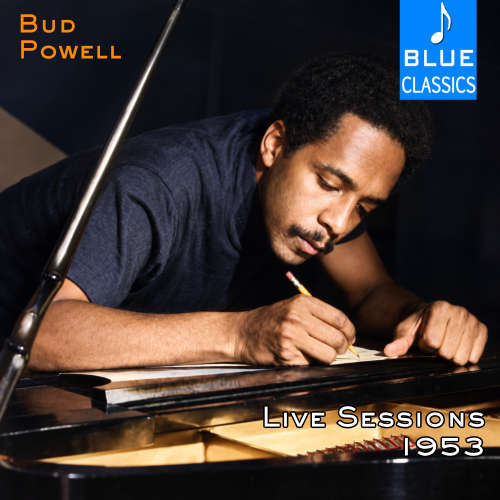 Live Sessions 1953
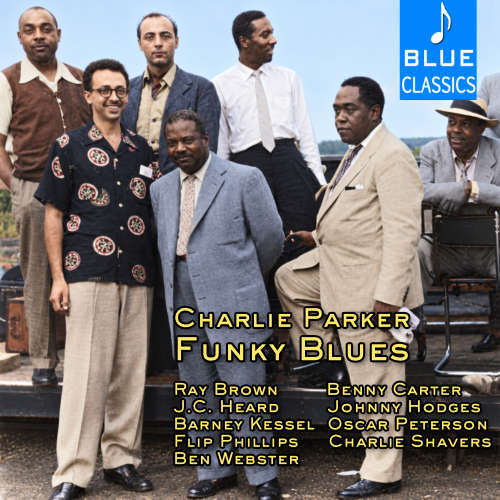 Funky Blues
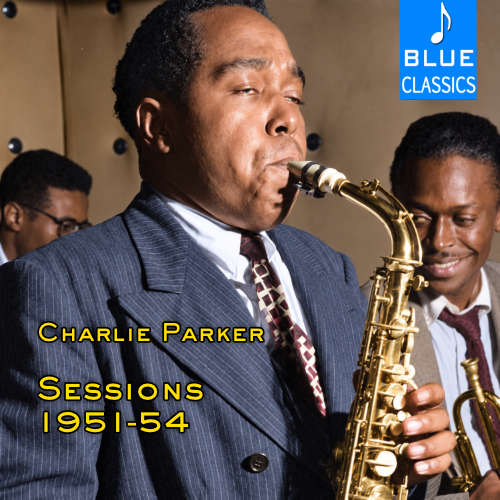 Sessions 1951-54
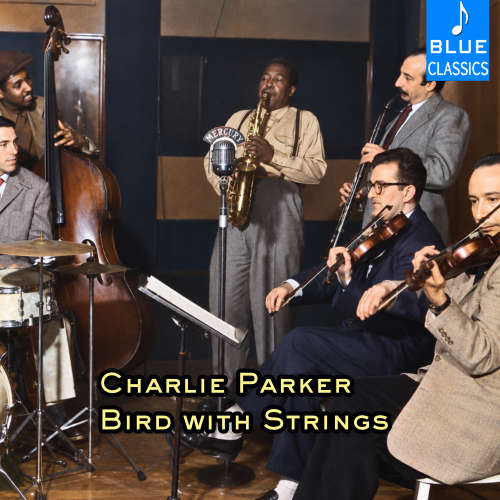 Bird with Strings
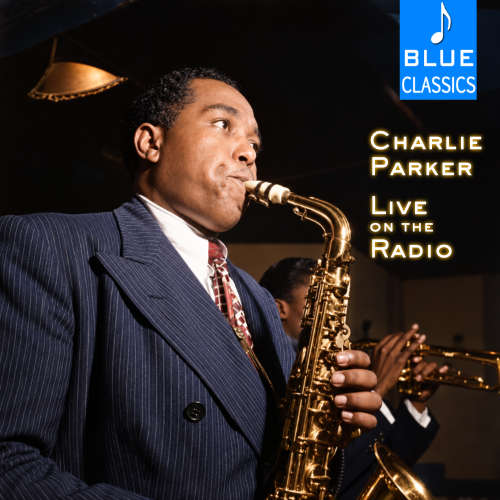 Live on the Radio
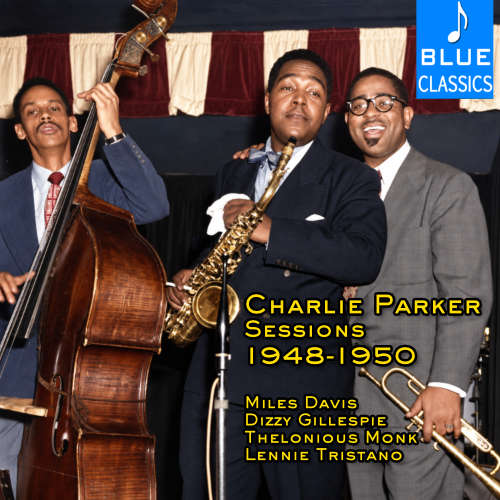 Sessions 1948-1950
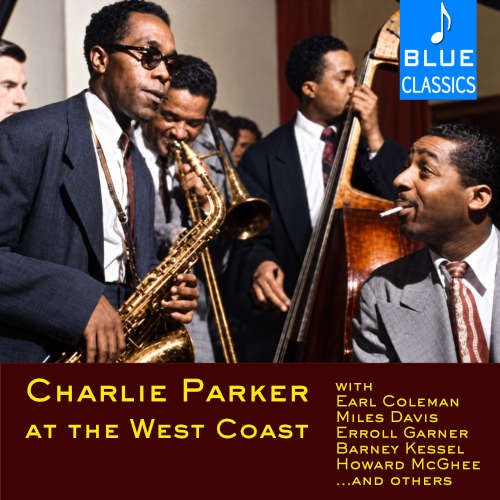 At the West Coast

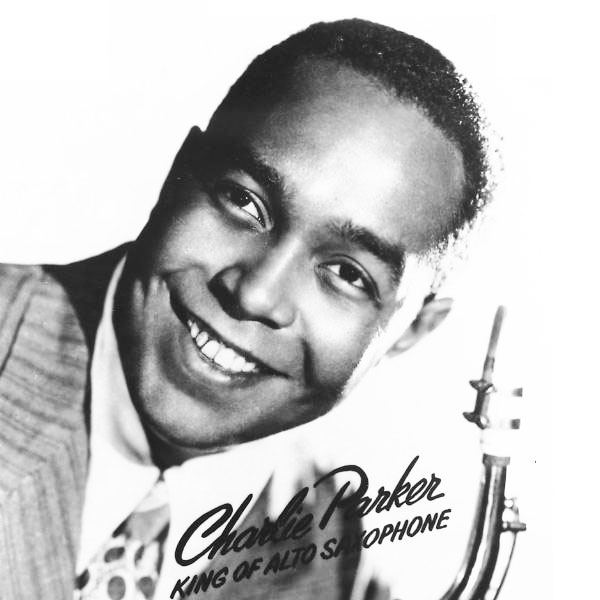
Charlie Parker - alto saxophonist
Charlie Parker (b. August 29, 1920 – d. March 12, 1955) was one of the central figures in the development of modern jazz and one of the principal architects of bebop. His career lasted less than two decades, yet his approach to melody, harmony, rhythm, and improvisation had a lasting effect on jazz musicians and on the way the music itself was conceived. Parker primarily played alto saxophone, and his recordings from the 1940s and early 1950s became important reference points for subsequent generations of musicians.Charles Parker Jr. was born on August 29, 1920, in Kansas City, Kansas, and grew up in Kansas City, Missouri. His father, Charles Parker Sr., worked as a railroad waiter and chef and had also performed as a pianist, dancer, and singer. Parker's mother, Adelaide “Addie” Bailey, was an important presence during his childhood. He developed an interest in music at an early age and began playing the saxophone as a teenager. By the age of 15, he had left school to pursue music as a profession.
Kansas City in the 1930s was an important environment for the development of jazz, with a substantial network of clubs, dance halls, and working bands. Parker learned through listening, playing, and participating in this musical environment. His early development was influenced by the Kansas City swing tradition, while his increasingly individual approach to harmony and improvisation gradually moved beyond the vocabulary of the bands around him.
One important part of Parker's development was his determination to understand harmony in greater depth. He explored the relationship between melodies and the underlying chord structures of popular songs and jazz standards, eventually developing a way of improvising that allowed familiar harmonic progressions to become the basis for new melodies. This approach was central to the music that later came to be known as bebop.
Parker's early professional work included appearances with bands in the Midwest and, eventually, the influential Jay McShann Orchestra. He moved between Kansas City and other musical centers and spent considerable time developing his technique. His first known recording was made in 1940 with Jay McShann's band.
The years of the early 1940s were important not only for Parker but for a group of musicians who were exploring a new direction in jazz. Parker became closely associated with trumpeter Dizzy Gillespie, pianist Thelonious Monk, drummer Kenny Clarke, and other musicians who were working in New York. Their experiments gradually produced a music that differed from the dance-oriented swing of the large commercial bands. The new style placed greater emphasis on small ensembles, fast tempos, complex harmonic structures, advanced rhythmic ideas, and highly individual improvisation.
The national recording strike of the early 1940s temporarily limited the ability of musicians to document the new music. When recording activity resumed, the emerging style could finally be heard on commercial records. Smithsonian material describes Parker and Gillespie's work during this period as part of the emergence of bebop, with recordings such as “Billie's Bounce,” “Now's the Time,” “Ko-Ko,” “Ornithology,” and “A Night in Tunisia” becoming associated with Parker's new musical language.
Parker's recordings from 1945 were particularly important. During sessions for Savoy Records, he recorded with musicians including Dizzy Gillespie, Miles Davis, Curley Russell, and Max Roach. These sessions produced recordings that demonstrated many of the characteristics associated with bebop: rapid melodic lines, substitution of new melodic material over familiar chord progressions, flexible rhythmic accents, and a strong emphasis on the soloist's ability to shape a performance spontaneously.
The relationship between Parker and the musicians around him was important to the development of the style. Miles Davis, who was still very young during his first period with Parker, became a member of Parker's groups in 1945. Their collaboration was one of the formative experiences of Davis's early career.
Parker was not simply an instrumental innovator. He was also a composer and a creator of melodies. Many of his pieces were constructed over the harmonic structures of established songs. “Ornithology,” for example, uses the chord progression of “How High the Moon,” while other Parker compositions similarly took familiar harmonic material and transformed it into new melodic compositions. This practice became common in bebop and provided musicians with vehicles for improvisation while allowing them to work within recognizable harmonic frameworks.
His style on alto saxophone was immediately recognizable. Parker's technique allowed him to play rapid passages with considerable clarity, while his phrasing could shift between flowing melodic lines and sharply articulated rhythmic figures. His improvisations were not simply collections of fast notes. His approach involved the transformation of harmony into melody, with rhythmic placement playing a central role. Smithsonian curator Dwandalyn Reece has described Parker's instrument as one associated with the characteristic sound of his bebop period and noted his ability to move between different tonal colors while handling complex harmonic and melodic material.
Parker's nickname “Bird,” or “Yardbird,” became closely associated with him. The precise origin of the nickname has been told in several versions, including the story that it originated during a road trip involving a chicken, although the details have long been surrounded by legend. The name eventually became sufficiently familiar that it was incorporated into the name of Birdland, the New York club that opened in 1949.
Parker's career was also marked by serious problems with drugs and alcohol. His heroin use began relatively early and became increasingly destructive. Periods of instability, illness, and incarceration interrupted his professional life. At the same time, he continued to perform and record at a remarkably high level during periods when his health allowed it. His personal difficulties became an inseparable part of the public mythology surrounding him, although they tell only part of the story of his life and work. The Smithsonian has specifically emphasized that Parker's artistic importance should not be reduced to his substance abuse and its consequences.
In the later 1940s, Parker's career expanded internationally. He worked with a succession of influential musicians and became one of the best-known figures in the new jazz. He appeared at clubs and concerts in New York and elsewhere, while recording for several labels, most importantly Savoy, Dial, and later Verve. His work for Dial included some of the performances that became particularly important in his discography.
The period around 1947–49 also produced some of Parker's most widely discussed recordings. He recorded in a variety of contexts, from small bebop groups to larger ensembles. In addition to the rapid, harmonically dense performances for which he was known, he demonstrated a different side of his musicianship in slower and more lyrical settings.
His growing international reputation was apparent in 1949, when he made his European debut at the Paris International Jazz Festival. The event contributed to his growing status outside the United States. That same year, the opening of Birdland in New York associated his name even more directly with the emerging bebop movement.
During the early 1950s, Parker continued to record and perform, but his health was deteriorating. One of his most significant projects was Charlie Parker with Strings, recorded in 1949 and released in 1950 by Mercury Records. The project placed Parker's improvising within arrangements for strings and showed that his musical ideas could function outside the conventional small-group bebop setting. The Smithsonian notes that the alto saxophone Parker acquired in 1947 is believed to have been the instrument he used for much of this later period, including Charlie Parker with Strings.
Parker continued to tour and record despite repeated physical problems. His playing remained a point of reference for musicians across different generations and styles. His influence extended beyond saxophonists to trumpeters, pianists, singers, arrangers, and composers. The improvisational principles he helped establish became part of the vocabulary of modern jazz.
His personal life during these years also included his relationship with Chan Berg, with whom he lived from 1950. They had two children, and Chan later took the surname Parker, although they were never formally married.
Parker's health declined further during the first half of the 1950s. He suffered from the effects of long-term drug and alcohol use and experienced periods of hospitalization and institutionalization. Nevertheless, he remained active as a performer when possible. His recordings from this period show that the fundamental qualities of his playing remained intact even as his physical condition became increasingly fragile.
In March 1955, Parker was staying with his friend and patron Baroness Pannonica de Koenigswarter in New York. He died on March 12, 1955, at the age of 34. Because of the condition of his body, the medical examiner initially estimated his age to be considerably higher than his actual age.
Parker's death marked the end of a short but unusually influential career. His musical vocabulary continued to spread through recordings, transcriptions, performances, and teaching. Musicians studied his solos, analyzed his harmonic practices, and incorporated elements of his rhythmic and melodic language into their own playing. The recordings made between the early 1940s and 1955 therefore document not only the career of one saxophonist but also a fundamental change in the language of jazz.
Parker's legacy rests principally on the recordings themselves. His playing demonstrated how an improviser could treat harmony as a source of new melodic possibilities, how rhythm could be used to reshape familiar musical structures, and how a solo could become a composition in real time. The recordings remain central documents of the development of bebop and of the transition from the swing era toward modern jazz.